Open Source
Granite PatchTST-FM-r2: Test Zero-Shot Forecasting First
Granite PatchTST-FM-r2 is best treated as a challenger: verify clean provenance, horizon-specific business value, and calibrated uncertainty before production rollout.
Full-stack developer and open-source advocate. Writes about developer tools, frameworks, and the craft of software.
Granite PatchTST-FM-r2 is best treated as a challenger: verify clean provenance, horizon-specific business value, and calibrated uncertainty before production rollout.
OpenAI's Agents API removes session and orchestration plumbing, but production teams still own the authority, security, evaluation, budget, and recovery boundaries around every agent workflow.
Encoder-prefill-decode disaggregation can reduce multimodal time to first token and increase same-SLO throughput, but only when vision encoding is a large enough share of request time. Teams should trace each serving stage, benchmark a workload matrix, optimize media preprocessing and caching, and promote only the traffic buckets that clear a reversible latency and cost gate.
OpenAI's GPT-Image-2.5 launch adds Flare for fast everyday generation and Sunburst for precision editing. Teams should migrate with a versioned edit-drift suite that measures protected-region change, instruction success, identity and layout retention, latency, and realized cost instead of trusting a few attractive samples.
Evaluate coding-agent costs across accepted fixes, failed attempts, and human review instead of optimizing token counts alone.
Google ADK now lets teams regression-test live voice agents with synthetic audio, tool assertions, and multi-turn rubrics.
A decision guide for choosing LFM2.5 QAD or DSpark based on memory, quality, runtime support, and decode latency.
A practical audit guide for GitHub Copilot’s August 26 default model availability change and September model retirements.
A practical guide to evaluating cuOpt as an end-to-end optimization service rather than a benchmark number.
GitLab’s August 2026 patch fixes a protected-branch pipeline authorization issue; self-managed teams should patch and then audit branch rules, secrets and runner isolation.
Promptfoo is an open-source CLI (24.1k GitHub stars) that treats LLM prompts as testable code using YAML test cases and assertions. OpenAI announced it was acquiring the company on March 9, 2026, committing to continue the open-source project. This guide covers installation (Node.js 22.22.0 or newer, Node 24 recommended), scaffolding a first eval with npx promptfoo@latest init, choosing assertion types by cost tier, guarding cost and latency, RAG and agent evals, CI gating strategy, the red teaming half of the tool, and three honest limits of eval suites.
SpeakoFlow is a free, MIT-licensed local-first voice assistant for Windows, macOS and Linux, built by solo developer Abhishek Barali as a fork of CJ Pais's Handy. It combines hotkey dictation, a 'Hey Flow' generative writing mode, an assistant panel with screen vision, live translation and AI cleanup. Speech-to-text always runs on-device via whisper.cpp and Parakeet; the assistant can run fully offline through a built-in llama.cpp engine, through Ollama or LM Studio, or through any OpenAI-compatible cloud provider with your own key. There is no account and no telemetry. The trade-offs are real: the binaries are not code-signed on Windows or macOS, requiring a manual quarantine-clearing step on Mac, and the project is at v1.0.1 with 126 commits, six GitHub stars and one maintainer.
Atlaso is a cross-tool AI memory layer from Atlaso Labs that installs into Claude Code, Cursor, Codex, Claude Desktop, OpenCode and Antigravity via a single shell command, capturing decisions after each turn and injecting the top five relevant memories before the next one. Its published four-judge study on LongMemEval-S (n=500, shared Qwen 3.5-9B reader) shows Atlaso beating mem0 by 9.8 to 14.8 percentage points, and also documents an 11.5-point loss to mem0 on the adversarial LoCoMo subset plus a failure to reproduce mem0's headline 93.4 percent figure. The shipped product lags the research: supersede logic is not triggered automatically, injected memories are invisible from the terminal, and there is no team memory or self-hosting. Free covers one device and one tool; Pro is 10 dollars a month and Build is 25.
Prelint is a GitHub and GitLab app that reviews every pull request against a team's product specs, ADRs, and prior decisions rather than against the code itself, targeting what it calls product drift: technically correct code that quietly contradicts decisions the team already made. It launched on Product Hunt on July 29, 2026, taking #1 Product of the Day and #1 Product of the Week with 676 points. The core architecture is a decision ledger that weighs the authority of each decision and supersedes rather than deletes entries, exposed to agents through a CLI and MCP server. Prelint's own research across 56,706 public pull requests found that docs context raised the reviewer flag rate from 13.3% to 36.6% at 80.8% precision. Pricing is $1 per completed review with no seats, and public repositories are free.
Google Antigravity is a VS Code fork built around autonomous agents, with a Manager View that dispatches up to five parallel agents and a built-in Chrome browser for front-end verification. Gemini is the default model, with Claude and GPT supported. Strengths are parallel-agent workflow and browser verification; weaknesses are shifting credit-based pricing, a five-agent cap, and a closed-source core. The verdict: a strong secondary tool, especially for front-end and Gemini-centric workflows.
Cursor, the VS Code-based AI editor from Anysphere, crossed $2B ARR and 1M+ paying users by February 2026 and is used in 64% of Fortune 500 firms. Its June 2025 shift to credit-based billing sparked backlash and a public apology. Auto mode is unlimited on paid plans; manually pinning frontier models like Opus is what drives surprise overages. Six tiers run from free Hobby to $200 Ultra.
Meetily is a privacy-first, open-source AI meeting assistant with 27.4K GitHub stars and an MIT license. Built on Rust and Tauri, it runs Whisper or Parakeet transcription and Ollama summarization entirely on your own device, so meeting audio never touches the cloud. It supports macOS and Windows, with flexible summary providers and a commercial PRO tier.
Bumblebee is Perplexity's open-source, read-only supply-chain scanner for macOS and Linux developer endpoints, written in Go with zero non-stdlib dependencies under Apache 2.0. It inventories npm, PyPI, Go, RubyGems, Composer and other package managers plus MCP configs, editor extensions, and browser extensions, emitting NDJSON findings against operator-supplied exposure catalogs. Its read-only design never invokes package managers, so it cannot trigger malicious postinstall scripts during a scan.
On July 15, 2026, xAI open-sourced Grok Build, the Rust terminal coding agent behind its grok CLI, under Apache 2.0. The release covers the agent loop, tools, TUI, and extension system, and supports a fully local-first config.toml path pointing at self-hosted inference. External PRs aren't accepted and the model stays closed, so it's a source-transparency release, not a community project.
A practical guide to LangGraph, the durable agent framework that hit 1.0 in October 2025 and the 1.2 line by mid-2026. It covers the three core primitives (state, nodes, edges), conditional edges for branching and loops, and checkpointer-based persistence for crash recovery and memory. It also explains the deprecation of create_react_agent in favor of LangChain's create_agent, and the rule of thumb for choosing between the high-level agent builder and low-level StateGraph.
Glaze by Raycast lets users build real native macOS apps by chatting with AI - apps that run locally, work offline, and support keyboard shortcuts, menu bar integration, and file access. It launched publicly on July 1, 2026 and topped Product Hunt. Free credits let you try it; Pro is $20/month for 200 credits, Team $30/seat. It is Mac only and the credit model is the main caveat.
Strix is an open-source (Apache-2.0) AI penetration-testing tool with ~39,000 GitHub stars. Its autonomous agents dynamically run your app, exploit OWASP Top 10 vulnerabilities, and validate each finding with a working proof-of-concept, cutting the false positives of static scanners. It installs via a single curl command, needs Docker plus an LLM API key, is model-agnostic through LiteLLM, and drops into CI/CD with a non-interactive mode that fails builds on findings.
ChatCut is an AI video editor that pairs an autonomous editing agent with a real, editable multi-track timeline, launched on Product Hunt in July 2026. Unlike one-click generators, it lets you prompt edits, then refine every cut manually, with XML export to Premiere or DaVinci. It bundles generation (Seedance 2.0, Kling 3.0, GPT Image 2, Nano Banana, ElevenLabs), uses credit-based pricing from a free tier, and its ChatGPT/Codex plugin lets editing run on your own tokens.
OpenHands is an MIT-licensed, self-hostable AI coding agent that works in a Docker sandbox to write code, run tests, and open PRs.
OpenClaw is a free, self-hosted, model-agnostic AI agent that runs as a persistent background daemon and acts across WhatsApp, Telegram, Slack, and Discord. It became the fastest-growing repo in GitHub history (383K+ stars) but carries serious security flaws: authentication off by default, plaintext credential storage, tens of thousands of internet-exposed instances, and fake installers spreading infostealer malware. Run it only from the official repo, behind a VPN, with auth on and scoped credentials.
Zed 1.0, released April 29, 2026, is an open-source code editor written in Rust with a custom GPU-accelerated framework, positioned as both a fast traditional editor and an AI workbench. It offers agentic editing, Zeta edit prediction, parallel agents, and the open Agent Client Protocol, plus a generous free tier. Its main drawbacks are a small extension library and uneven language support compared with VS Code.
Granola is an AI meeting notetaker that listens to your device audio instead of joining calls as a bot, then merges your rough notes into polished writeups. It lands ~90-92% transcription accuracy, offers 29+ templates, and its $14/user/month Business plan adds CRM integrations (HubSpot, Attio, Affinity) plus MCP support. Weak spots: speaker attribution at 3+ participants, no native auto-distribution, and a Mac-and-Google lean. Best for founders, execs, and client-facing teams.
LiteLLM is an open-source gateway that gives developers a single OpenAI-format interface to call 100+ LLM providers. This tutorial covers installing the SDK and Proxy Server, switching providers by changing a model string, unified exception handling, streaming, and adding cost tracking, observability, virtual keys, and budgets.
Langfuse is an open-source, MIT-licensed LLM observability platform acquired by ClickHouse in January 2026. It provides hierarchical tracing, prompt management, evaluations, and datasets. Its OpenTelemetry-based Python SDK v3 uses the @observe decorator and integrates with LangChain, the OpenAI SDK, Anthropic, and LiteLLM.
Wispr Flow is a system-wide AI voice dictation tool for Mac, Windows, iPhone, and Android that cleans up speech into polished text in any app. It's free up to 2,000 words/week on desktop; Pro is $15/month ($12 billed annually) for unlimited use, Command Mode voice editing, and team features. It supports 100+ languages with a Privacy Mode and HIPAA-ready controls. Value scales directly with how much you write.
Warp is an Agentic Development Environment that folds a terminal, coding agents, and shared context into one app centered on prompting rather than typing. It scores 71% on SWE-bench Verified and #1 on Terminal-Bench (52%), and its standout feature is running multiple agents in parallel. Warp went open-source in April 2026. Pricing settled at a $20/mo Build plan with 1,500 credits plus BYOK, after volatility that hurt early-adopter trust.
Unsloth is an open-source library that fine-tunes open LLMs (Llama, Qwen, Mistral, Gemma, gpt-oss) roughly 2x faster and with up to 70% less VRAM than a stock Hugging Face setup, without sacrificing accuracy. It achieves this with custom OpenAI Triton kernels and a manual backpropagation engine, and fuses LoRA with 4-bit quantization. It runs on any NVIDIA GPU with CUDA Capability 7.0+, including the free Colab T4. Install with 'pip install unsloth' and use FastLanguageModel.from_pretrained plus get_peft_model to attach LoRA adapters before training with trl's SFTTrainer.
Bolt.new, built by StackBlitz on WebContainers, turns plain-English prompts into deployed full-stack apps entirely in the browser with zero setup. It excels at fast prototyping across React, Next.js, Vue, Svelte and Express. The main drawback is token-based pricing: usage scales with project size because the file system re-syncs to the AI each message. Plans: Free, Pro at $25/mo, Teams at $30/member/mo.
Lovable is an AI full-stack app builder that turns plain-language prompts into deployed web apps with frontend, backend, database, and auth via Lovable Cloud. Pricing starts free, with Pro at $25/month (100 monthly plus 5 daily credits, shared across unlimited users) and Business at $50/month; students get up to 50% off. The credit system means real SaaS costs run nearer $65-75/month once Cloud usage is counted. Strengths are speed to a live prototype, owned exportable code, and pre-wired full-stack integration. Weaknesses are complex logic that trips the AI and metered limits for heavy users. Best as a launchpad, not a production finish line.
DSPy is a Stanford NLP Python framework (v3.3, MIT-licensed, 6.4M+ monthly downloads) for programming LLMs instead of hand-writing prompts. You declare tasks as typed signatures, compose them as modules like Predict/ChainOfThought/ReAct, define a metric, then run optimizers such as GEPA or MIPROv2 to auto-tune prompts — often lifting a baseline from ~62% to ~89% on the same model. Used in production by Shopify, Databricks, Dropbox, and Replit.
vLLM is the default open-source LLM serving engine in 2026. PagedAttention cuts KV-cache memory waste from 60-80% to under 4%, and continuous batching keeps the GPU full, together delivering 14-24x the throughput of Hugging Face Transformers. Install with pip, launch an OpenAI-compatible server via 'vllm serve', then tune --gpu-memory-utilization, --max-num-batched-tokens, --tensor-parallel-size, and chunked prefill against real traffic.
A hands-on guide to Ollama, the default local-LLM runner in 2026 (v0.30.10). Covers install, pulling and running models, calling them from the OpenAI SDK at localhost:11434, structured JSON outputs, tool calling, and Modelfiles, plus how to size a model to your hardware.
OpenCode is an open-source (MIT), terminal-native AI coding agent with 178K GitHub stars. It is model-agnostic, connecting to 75+ providers (Anthropic, OpenAI, Google, Ollama) with bring-your-own keys. LSP integration feeds compiler diagnostics back to the model; built-in build and plan agents plus a general subagent. Runs locally/air-gapped, ships frequently (v1.17.9, 826 releases), and now has a desktop beta. Trade-offs: a terminal learning curve, you pay your own API bills, and quality depends on the model you plug in.
CodeRabbit is an AI code reviewer that posts line-by-line PR feedback across GitHub, GitLab, Azure DevOps and Bitbucket. Plans run Free, Pro (4/user/mo), Pro Plus (8) and Enterprise, billed only for developers who open PRs. Strengths: context via MCP, one-click autofix, deep static analysis. Watch the 5/10/12 review rate limits.
A practical guide to OpenAI Structured Outputs: the difference from JSON mode, function calling vs response_format, strict schema rules, constrained decoding, limits, and cross-provider options.
A hands-on review of Google Antigravity 2.0: its multi-agent orchestration, pricing, and trade-offs.
Context engineering is the discipline of curating tools, prompts, retrieval, and memory each turn so AI agents stay reliable over long-horizon tasks.
Prompt caching stores the computed KV attention tensors for a repeated prompt prefix so the model skips recomputation, cutting input cost and latency. Anthropic (explicit cache_control, ~90% read discount), OpenAI (automatic, 50% off, 1,024-token minimum), and Google Gemini (implicit plus explicit cache objects, up to 90%) all support it. The one rule that determines hit rate: put all static content at the front of the prompt and all dynamic content at the back.
Firecrawl converts messy, JavaScript-rendered websites into clean, LLM-ready markdown for RAG and AI agents. Install with 'pip install firecrawl' and use the Firecrawl class: scrape for known URLs (1 credit), crawl for discovery (1 credit per page, always set a limit), and schema-based extraction for typed JSON. Watch Enhanced/Stealth Mode, which costs 5 credits per page on Cloudflare-protected sites, and note that credits do not roll over.
A practitioner's guide to grounding retrieval-augmented generation systems. Covers fixing retrieval first, hybrid dense-plus-keyword search, cross-encoder reranking, contextual compression, refusal prompting, verified citations, Chain-of-Verification, confidence-threshold abstention, and measuring faithfulness with RAGAS.
A practical 2026 security playbook for Model Context Protocol agents. It explains MCP-specific threats (prompt injection, tool poisoning, rug pulls, confused-deputy), dissects the critical CVE-2025-6514 mcp-remote RCE, and gives concrete hardening steps: patch to 0.1.16, enforce OAuth 2.1 over HTTPS, isolate servers, gate destructive actions, and audit agent activity.
AGENTS.md is a Linux Foundation-stewarded open standard, adopted by 60,000+ repositories and read natively by 20+ tools including Codex, Cursor, and Copilot. This guide covers the eight core sections, the phrasing patterns that change agent behavior, monorepo nesting, and how it differs from CLAUDE.md, .cursorrules, MCP, and SKILL.md.
A defense playbook for prompt injection in AI agents. It explains why the attack is unsolvable at the model layer, frames the threat with Simon Willison's lethal trifecta (private data, untrusted content, external communication), and prescribes layered controls: architectural separation, least-privilege tools, input filtering, egress allowlisting, circuit breakers, and hardened models, which can cut attack success from 73.2% to 8.7%.
Kanwas is an open-source AI workspace enabling human-AI collaboration on a shared canvas.
Understand-Anything converts any codebase into a navigable knowledge graph for easier comprehension.
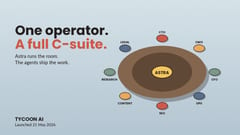
Tycoon AI provides solo founders with an AI CEO, Astra, and a full virtual C-suite.
Emdash is an open-source IDE that runs 22 coding agents in parallel for enhanced development.
Pipali is Khoj AI's open-source desktop AI coworker, integrating with your files and apps, supporting multiple LLMs.
Matt Pocock's 91.7K-star 'skills' repo on GitHub provides solutions to common failures in Claude Code.
Raindrop Workshop is an open-source local AI agent debugger, streaming token calls and enabling Claude Code evaluations.
OpenHuman is a trending AI agent that anticipates user input, featuring a Memory Tree and numerous integrations.
Kilo Code v7 is an open-source AI agent rebuilt for parallel coding, offering subagents and multi-model comparison.
Our Wispr Flow review covers the AI dictation app's high accuracy across platforms and its cloud-only limitations.
Vercel Open Agents provides forkable, sandbox-isolated background coding agents with GitHub integration and PR creation.
GitHub's Spec-Kit provides AI coding agents with structured specs, ending 'vibe-coding'.
OpenClaw, a self-hosted AI agent, saw rapid growth amidst rebrands and a crypto scam.
FlowMarket enables AI agents to autonomously find and negotiate B2B deals in a live network.
Cursor Bugbot resolves 78% of bugs by learning from merged PRs, outperforming rivals.
Google's Gemini API Webhooks eliminate polling loops for long-running jobs, simplifying integration.
Postiz is a popular open-source social scheduler, offering a Buffer alternative with AI agent capabilities.
Microsoft's VibeVoice is an open-source voice AI offering advanced ASR and TTS capabilities.
Windsurf 2.0 integrates Cognition's Devin AI agent directly into the IDE for seamless management.
NVIDIA's Nemotron 3 Nano Omni is a 30B open multimodal model, processing diverse data with high throughput.
Archon OS is an open-source knowledge backbone that helps AI coding assistants remember information.
Block's open-source, local-first AI agent, Goose, gained 35K stars and joined the Linux Foundation.
ElevenCreative by ElevenLabs combines all AI content creation tools into one platform.
Voicebox is a local-first, open-source voice cloning studio for Mac and Windows, built on Qwen3-TTS.
NVIDIA Ising offers open-source AI models to improve quantum error correction, making quantum computing more effective.
Z.ai's GLM-5.1 is an open-source 754B model that runs autonomously for eight hours, enhancing AI agents.
Caveman, a Claude Code skill, dramatically cuts AI output tokens by 65%, optimizing agent interactions.
Ghost Pepper offers secure, 100% local speech-to-text and transcription for macOS on Apple Silicon.
Edgee Codex Compressor, a Rust gateway, cuts LLM costs by 35.6% by compressing tool output.
Ray is an open-source AI financial advisor that runs locally, securing your data while connecting to banks.
Hermes Agent is an open-source AI that learns your workflow with persistent memory and skill creation.
Cohere Transcribe, an open-source ASR model, dethrones Whisper with superior accuracy and speed.
Baton is a desktop app for developers to orchestrate, monitor, and review multiple AI coding agents.
Google's Gemini CLI, an open-source terminal AI agent, hits 101K GitHub stars with new features.
Google DeepMind's Gemma 4 releases four open-weight models that rank high and run on consumer hardware.
Moondream 3 is a 9B vision model that runs efficiently like a 2B, offering advanced capabilities.
Mistral's Voxtral TTS is an open-weight speech model challenging ElevenLabs with naturalness and voice cloning.
Compare the top 5 AI tool directories to quickly find the best AI tools for your needs.
Mistral Small 4 unifies three AI products into one powerful open-source model, simplifying capabilities.
Lightricks' LTX 2.3 is an open-source model generating native 4K video with perfectly synced audio.
Biome v2.4, a Rust toolchain, is replacing ESLint and Prettier with faster, more efficient performance.
OpenClaw, a self-hosted AI agent integrating with various UIs, quickly became a GitHub sensation.