Windsurf 2.0: Cognition Bakes Devin Right Into the IDE
Cognition just answered the question every developer using AI coding agents has been asking for a year: what if I could stop juggling tabs? On April 16, 2026, the company shipped Windsurf 2.0, an update that pulls its cloud agent Devin out of its standalone product and drops it directly into the editor, alongside a brand-new Kanban view called the Agent Command Center.
This is the most consequential release to come out of Cognition since it acquired Windsurf last year — and it changes how an entire workflow gets organized. Here is what it actually does, what works, and where it still has rough edges.
The Problem Windsurf 2.0 Is Trying to Solve
Anyone running more than one AI agent at a time knows the feeling. You spin up a Cascade session in your IDE for the feature you are actively writing. You hand off the boring refactor to Devin in another browser tab. You have a third agent running tests in CI. And somewhere along the way, you lose track of which agent is doing what, where, and against which branch.
Cognition calls this the agent management problem, and it is not a hypothetical. The company's own blog frames the future of software engineering as one where developers manage 10x or more agents at once, mixing local sessions and cloud VMs. Without a place to see all of them in one screen, that vision collapses into chaos.
Windsurf 2.0 ships three features designed to fix that.
The Agent Command Center
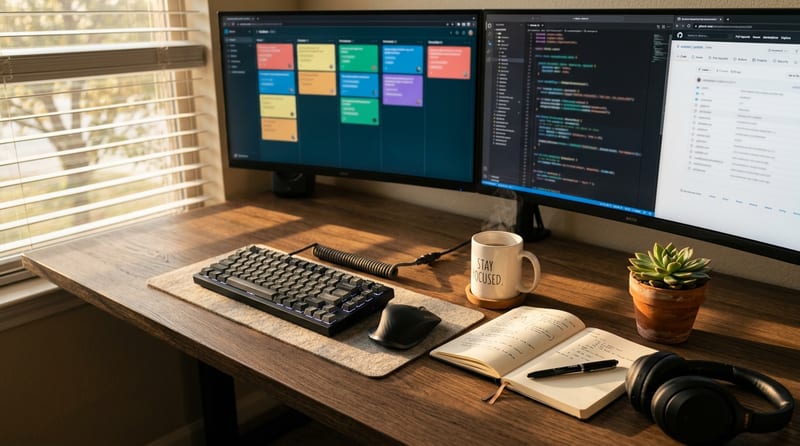
The headline feature is the Agent Command Center, a Kanban-style board built directly into the editor. Every running agent — local Cascade sessions and remote Devin VMs alike — appears as a card, grouped by status: working, blocked, ready for review, or completed.
What makes this useful in practice is that the same login works for both products. If you have a Devin subscription, those sessions show up next to your Cascade ones automatically. You can click into any card to see the agent's progress, log, files touched, and pull request — without leaving the IDE.
It is the kind of UX you suddenly realize you needed only after you have used it for a few hours.
Devin, Now Built In
Until April 16, Devin was a separate Cognition product with its own web interface and pricing. Windsurf 2.0 changes that. Devin is now bundled with Windsurf Pro, Max, and Teams plans, and consumes shared quota from your Windsurf account.
Each Devin session still runs on its own cloud VM with a full desktop, browser, and computer-use access, exactly as before. It can keep grinding on a long-running task — a flaky test investigation, a multi-file refactor, a deploy that requires pulling logs and restarting services — after you close your laptop.
The real shift is in the handoff. The intended workflow is:
- Plan with Cascade locally, where you have full editor context and can iterate on prompts.
- Click "Hand off to Devin" when the task is well-defined enough that you do not need to watch every step.
- Devin executes on a cloud VM, opens a pull request, and pings you when it is ready.
- You review the PR in Windsurf. The whole loop is in one app.
"A cloud agent is where you delegate work that needs to get done but doesn't need you watching over the shoulder: implementation, testing, QA, and deployment." — Cognition's launch post.
That framing is correct. The agent in your editor is for thinking with you. The agent on a VM is for grinding without you. They are different tools, and Windsurf 2.0 finally treats them that way.
Spaces: Project Context That Persists
The third new piece is Spaces, a way to group related agent sessions, pull requests, and files together. When you create a new agent inside a Space, it inherits that Space's context automatically — no more re-pasting requirements, links, and constraints into every new session.
In practice, this is what makes long-horizon work tolerable. If you are spending two weeks on a migration, you create a Space for it. Every Cascade and Devin session you spin up for that migration starts with the right files loaded, the right repo branched, and the right tooling pre-configured. The Kanban board in the Command Center filters by Space, so you can see everything related to that project at a glance.
It is conceptually similar to the "project" abstraction in Linear or Notion — a small piece of structure that prevents agents from feeling like one-off conversations.
Pricing and Availability
| Plan | Price | Devin Included? |
|---|---|---|
| Free | $0 | No |
| Pro | $20/month | Yes (shared quota) |
| Max | $200/month | Yes (shared quota) |
| Teams | $40/user/month | Yes (shared quota) |
| Enterprise | Custom | Yes |
New GitHub connections receive up to $50 in extra usage credits, and existing Devin standalone subscribers can log into Windsurf with the same account to access their sessions in the Command Center.
One nuance worth flagging: users who subscribed before March 2026 keep their old credit-based pricing. New signups land on the daily-quota system. If you are returning to Windsurf after a break, you may want to check your plan dashboard before assuming your old quota carries over.
What Still Has Rough Edges
It is not all polished. The Devin handoff currently requires the task to be reasonably well-scoped — vague prompts like "fix the bugs in this file" still produce mixed results when you are not there to course-correct. Cognition is upfront about this in its docs: Devin is best for delegated work that has a clear definition of done.
The Kanban board also gets dense fast. If you are running 10+ concurrent agents, the visual model starts to fray at the edges. Filtering by Space helps, but the UI is clearly tuned for the 3-to-7-agent range that most real teams operate in today.
Finally, Spaces are still a Windsurf-only abstraction. They do not yet sync to your repo or your project tracker, so the context you build inside a Space lives only in Windsurf. That is fine for now, but a future version that connects Spaces to GitHub Projects or Linear cycles would close the loop.
The Bottom Line
Windsurf 2.0 is the first AI coding tool that takes seriously the idea of an engineer running many agents in parallel. Cursor, Copilot, and Claude Code are all still optimized for the one developer, one agent, one chat model. Cognition is betting that the next era looks different — that developers will be managers of agent fleets, and the tool you reach for first is the one that gives you a Kanban board, a unified login, and a clean handoff between local thinking and cloud grinding.
If you already pay for Devin and Windsurf separately, this update saves you money and a tab. If you are new to either, the Pro plan at $20/month with Devin bundled is now the most generous entry point to autonomous coding agents on the market. And if you are still pasting prompts into ChatGPT and copying code back into VS Code by hand, this is the moment to look up.
The question is no longer should AI write your code? It is how do you keep track of all the agents writing your code at once? Windsurf 2.0 has the most credible answer yet.