Most "AI for teams" tools are wrappers around a chat window. You paste in context, the model responds, the thread dies, and the next person on your team starts from zero. Kanwas — which hit #1 on Product Hunt's daily leaderboard in May 2026 — is built on the bet that the chat box itself is the bottleneck.
The pitch: an open-source canvas where humans and AI agents work in the same document, with the same memory, on the same timeline. The repo on GitHub has crossed 676 stars in about five weeks since the April 22, 2026 launch, with 91 forks and a steady stream of activity from a team led by Johan Cutych (formerly of Veed.io), Predrag Ristič, and Marek Vybíral.
The problem Kanwas is built around
Cutych's public thesis for the product reads like an indictment of how product teams currently use AI. The argument: large language models reason extremely well, but they have average taste because training compresses everyone's judgment into one distribution. Reasoning without specific context produces "plausible, generic" output — the kind every PM recognizes from their last Claude session.
"Sharing docs is so 2025. Sharing context is the future." — Kanwas landing page
The fix Kanwas proposes is not a smarter model. It's a workspace that accumulates your team's context as a byproduct of normal work, then hands that context to whichever frontier model you point at it.
What's actually in the box
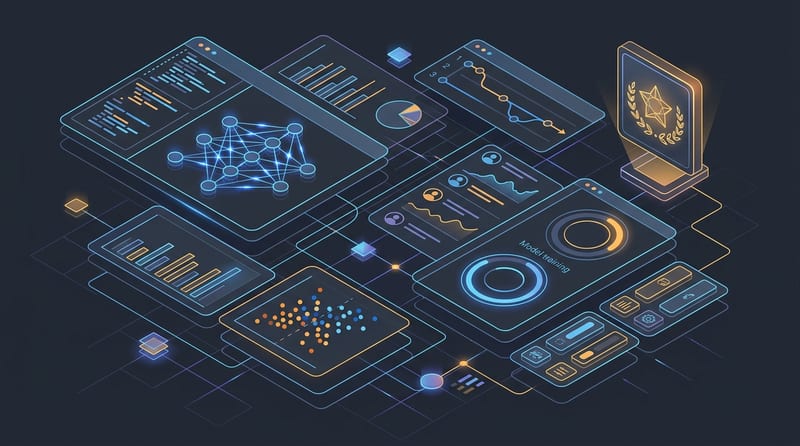
Kanwas is a multiplayer canvas with an agent baked in. You drop in documents, embeds, code, tasks, and iframes; teammates and the agent edit the same surface in real time; and every tool call the agent makes streams into the timeline so it's auditable instead of hidden in a chat sidebar.
A few decisions stand out:
| Decision | Why it matters |
|---|---|
Files are plain .md with YAML frontmatter |
No proprietary database; you can git clone your workspace |
| Git-backed version history | Standard diff/blame on every doc, no vendor lock-in |
| CLI for sync to local filesystem | Edit in your IDE, push to the canvas |
| Bring-your-own model (Claude, GPT, Gemini) | You're not paying twice for inference |
| 1,000+ integrations (Slack, Linear, Notion, codebases) | Context can flow in without manual copy-paste |
The agent runs in two modes: Direct ("just do the thing") and a thinking-partner mode that asks questions, pushes back, and surfaces gaps before producing output. Both modes operate against the same shared context graph, which is the part that makes the product feel different from a Notion-plus-AI bolt-on.
Why open-source is the load-bearing decision
A closed-source canvas with the same features would be a fine product. An open-source one changes the calculus for two groups.
For teams worried about vendor risk, the .md-plus-Git architecture means there is no migration project if Kanwas the company disappears. The files are already in the format every other tool reads. You can self-host the whole stack via docker-compose.yml (it's in the repo) and run the agent against your own model keys.
For engineering teams already living in a CLI, the kanwas CLI tool means you can script workspace updates from CI, bulk-import existing markdown notes, or treat the canvas as a structured backend for an agent you wrote yourself. That's a very different posture than a SaaS workspace that gates everything behind a web UI.
The license shown on GitHub currently reads as "NOASSERTION" — meaning a LICENSE file is present but not in a form GitHub auto-detects. Multiple third-party reviews and the team's public posts describe the project as Apache 2.0; if you're planning to fork or build commercially on top, read the actual LICENSE file in the repo before you ship.
The competitive picture
Kanwas is squarely aimed at the seam between three categories that all overlap but none of which solves the full problem:
- Whiteboards (FigJam, Miro) — good for live sessions, bad at staying alive afterward.
- Chat-first AI (Claude, ChatGPT) — fast answers, no shared reasoning surface.
- Knowledge bases (Notion, Obsidian, Cognee) — store context, but aren't thinking spaces.
The Kanwas thesis is that none of those is the right primitive for AI-native product work, because the work itself has spatial structure (decisions reference evidence, drafts reference decisions, deliverables reference drafts) that a linear chat or a flat doc throws away. Whether that bet is right is an open question — but the early traction (customer logos including Veed, Wix, Grammarly, TheFork, and Quanos appear on the landing page) suggests the framing is at least resonating with the design-partner crowd.
The Bottom Line
Kanwas is the most interesting take on "AI workspace" since Notion AI shipped, and the fact that it's open-source under a permissive license (pending you verify the LICENSE file) makes the downside small. The product is young — 676 stars and five weeks in the wild is not a moat — and the hosted version is still free with no published pricing, which means you should expect that to change. But if your team is spending real money on AI subscriptions and getting generic output back, the diagnosis Cutych is selling is uncomfortably accurate, and Kanwas is the first tool I've seen that's structurally designed to fix it rather than paper over it.
Try the hosted version at kanwas.ai/app, or clone the repo and run it yourself.