AI NewsNvidia released Nemotron 3.5 Lightning on August 11, 2026: an open 30B mixture-of-experts model with 3B active parameters, licensed under OpenMDW-1.1 with weights, training data and recipes included. It targets the execution layer of long-running agents rather than frontier reasoning, reaching 86% accuracy on PinchBench while completing 10,000 tasks 30% faster than Qwen3.6 35B, and up to 4x the output speed of similar-sized models. Speed comes from baked-in multi-token prediction plus DSpark and DFlash draft models, with NVFP4 and BF16 checkpoints. It runs on Jetson, RTX 5090 and DGX Spark via LM Studio, llama.cpp, Ollama and Unsloth, and ships alongside NeMo Switchyard for routing planning to frontier models and execution to Lightning.
Aug 12, 2026 · 6 min read 
AI NewsByteDance released Seedance 2.5 on July 31, 2026. It generates 30-second video clips with audio in a single pass, supports multi-turn extension, and accepts up to 30 images, 10 videos, and 10 audio files as reference per input. Google's Gemini Omni Flash currently caps output at 10 seconds and does not yet support audio reference uploads or scene extension in the Gemini API. Seedance 2.5 launched on Jimeng AI and Doubao Pro; BytePlus ModelArk published a Seedance 2.5 tutorial on August 7, 2026, but regional API availability should be verified before building a production dependency.
Aug 10, 2026 · 7 min read 
AI NewsMeta Superintelligence Labs released Muse Code, a beta terminal coding agent for macOS and Linux powered by the new Muse Spark 1.2 model, on August 5, 2026. Meta reported 82.9% on Terminal-Bench 2.1 but placed behind Claude Opus 5 on all three coding charts it published, and both figures come from Meta's own harness with no verified leaderboard entry. Meta's previous model published 80.0 and verified at 76.2% when the Terminal-Bench team ran it. The genuinely notable engineering is an append-only event log that makes runs replay-exact and restart-safe, plus persistent async background agents. The most consequential detail is pricing: a contributor tier at $0.10 per million input and $0.20 per million output tokens, 12.5x and 21x cheaper than standard, in exchange for Meta training on your prompts.
Aug 6, 2026 · 8 min read 
AI NewsDeepSeek upgraded its deepseek-v4-flash API to the 0731 public beta on July 31, 2026 — an API-only post-training update that leaves the 284B/13B MoE architecture, 1M context window and $0.14/$0.28 pricing untouched. Artificial Analysis measures a 10-point Intelligence Index jump to 50 and a GDPval-AA v2 rise from 1189 to 1559 Elo, with Cost per Task roughly 60% below GPT-5.6 Luna. Accuracy on AA-Omniscience is unchanged at 37%, and the 0731 weights are not open — only the April 24 checkpoint is on Hugging Face under MIT.
Aug 5, 2026 · 6 min read 
Deep DivesSpeculative decoding accelerates LLM inference by having a cheap drafter propose several tokens that the target model verifies in one parallel forward pass, with a rejection-sampling step that makes the output distribution provably identical to the target model's. The landscape runs from separate draft models through Medusa (2.2-3.6x) and EAGLE-3 (up to 6.5x) to DeepSeek's co-trained MTP heads (85-90% second-token acceptance) and model-free n-gram lookup. The catch: speculation spends surplus compute to save memory bandwidth, so gains shrink as batch size rises and can go negative once the GPU becomes compute-bound.
Aug 5, 2026 · 10 min read 
AI NewsAlibaba released Qwen3.8-Max on August 3, 2026, a 2.4-trillion-parameter mixture-of-experts model with a 1M-token context window, multimodal (text/image/video) input, and $2/$6 per-million-token pricing. Benchmarks are self-reported and lead on multimodal and agentic tasks while trailing the frontier on pure software engineering. Open weights for the flagship and a deployable 27B checkpoint are promised the following week.
Aug 4, 2026 · 4 min read 
AI NewsDeepSeek released V4 as two open-weight mixture-of-experts models: V4-Pro (1.6T total / 49B active) and V4-Flash (284B / 13B active), both with a 1M-token default context and 384K max output. A novel token-wise compression plus DeepSeek Sparse Attention (DSA) makes the long window affordable. API pricing is aggressive (V4-Flash $0.14/M input, $0.28/M output; V4-Pro $0.435/$0.87), and the old deepseek-chat and deepseek-reasoner endpoints were retired after July 24, 2026. Reported ~80.6% on SWE-bench Verified.
Aug 1, 2026 · 5 min read 
Deep DivesFlashAttention is an IO-aware, exact attention algorithm from 2022 that avoids writing the full N-by-N attention matrix to slow GPU HBM. Using tiling, an online-softmax running-statistics trick, kernel fusion, and recomputation, it cuts memory from O(N^2) to O(N) and delivered up to 7.6x speedups. FlashAttention-2 reached ~70% of A100 peak FLOPs; FlashAttention-3 (2024) exploits Hopper asynchrony and FP8 to hit ~840 TFLOPs BF16 (~75% H100 utilization). It now powers PyTorch, vLLM, and long-context serving.
Aug 1, 2026 · 9 min read 
AI NewsPoolside released Laguna S 2.1 on July 21, 2026, a 118B-parameter Mixture-of-Experts coding model activating ~8B params per token, with a 1M-token context and a permissive OpenMDW-1.1 license. First-party benchmarks show 78.5% on SWE-Bench Multilingual, but independent verification is still pending. Day-one FP8/NVFP4/INT4 and GGUF builds make it genuinely self-hostable.
Jul 31, 2026 · 5 min read 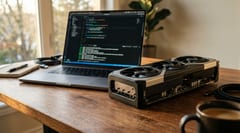
Deep DivesRoPE (Rotary Position Embeddings), introduced in the 2021 RoFormer paper, injects position into transformers by rotating query and key vectors so attention scores depend only on relative distance. It became the default across LLaMA, Mistral, Qwen and more. Because RoPE fails to extrapolate past its training length, methods like Position Interpolation, NTK-Aware scaling, and YaRN extend it to 128K-token context windows.
Jul 30, 2026 · 8 min read 
AI NewsFLUX 3, released July 23 2026, is Black Forest Labs' first multimodal model to generate video, audio, and robot actions from one set of weights, built on the Self-Flow method. FLUX 3 Video produces up to 20-second clips with native audio and led human-preference tests over Luma Ray 3.2 (93%) and Runway Gen-4.5 (77%), tying Seedance 2.0 and Gemini Omni Flash at 52%. Access is gated: video and action first, image next, open weights last.
Jul 28, 2026 · 5 min read 
AI NewsClaude Opus 5, released July 24, 2026, is Anthropic's new default model: near-Fable 5 capability at $5/$25 per million tokens (half Fable 5's price, flat vs Opus 4.8). It leads on Anthropic's own runs of Frontier-Bench, OSWorld 2.0, AutomationBench, ARC-AGI-3 and GDPval, but loses on DeepSWE, HLE, a legal benchmark and HealthBench. It posts Anthropic's lowest misalignment score (2.30), ships with no default data retention, and adds beta tool-swapping and safety-filter model routing.
Jul 26, 2026 · 7 min read 
Deep DivesMamba's selective state space models scale linearly and rival Transformers, and 2026's frontier models increasingly blend the two into hybrids.
Jul 23, 2026 · 7 min read 
Deep DivesGRPO (Group Relative Policy Optimization) is a critic-free reinforcement learning algorithm introduced in the DeepSeekMath paper (arXiv 2402.03300). Instead of training a separate value model like PPO, it samples a group of responses per prompt and computes each response's advantage relative to the group's mean and standard deviation. It powered DeepSeek-R1's emergent reasoning and is the central baseline for reinforcement learning with verifiable rewards in 2026, spawning variants like Dr. GRPO, DAPO, and GSPO.
Jul 22, 2026 · 6 min read 
AI NewsThinking Machines Lab, founded by ex-OpenAI CTO Mira Murati, released Inkling on July 15, 2026 — an open-weight mixture-of-experts model with 975B total parameters (41B active), trained on 45 trillion multimodal tokens. The company openly says it isn't the strongest model available; instead it's a customizable foundation enterprises fine-tune via the Tinker platform. The release doubles as an argument that owned, adaptable models beat rented one-size-fits-all APIs.
Jul 18, 2026 · 5 min read 
AI NewsMeta released Muse Spark 1.1 on July 9, 2026, opening its reasoning model to developers via a paid API priced at $1.25/M input and $4.25/M output tokens, undercutting Grok 4.5 and Anthropic's Opus. Meta claims wins over older rival models and Google's latest Gemini, but did not compare against the newest flagships, and a bigger model code-named Watermelon is still in training.
Jul 13, 2026 · 6 min read 
AI NewsGrok 4.5, released July 8, 2026, is xAI's coding-focused model. It ranks 4th on the Artificial Analysis Intelligence Index (score 54), wins SWE Marathon (29%), and prices at $2/$6 per million tokens with 4.2x better token efficiency than Opus 4.8. Not yet available in the EU.
Jul 12, 2026 · 5 min read 
AI NewsOpenAI made its three-tier GPT-5.6 family (Sol, Terra, Luna) generally available on July 9, 2026 after government safety review. Pricing runs from Luna at $1/$6 to Sol at $5/$30 per 1M tokens, with a Sol Fast option at $12.50/$75 on Cerebras. The release adds Programmatic Tool Calling in the Responses API (63.5% fewer tokens, 50.1% fewer turns) and longer prompt caching, but Sol's 64.6% on SWE-Bench Pro still trails Claude Mythos 5 (80.3%).
Jul 11, 2026 · 5 min read 
Deep DivesMixture of Experts (MoE) replaces a transformer's single feed-forward network with many smaller expert networks plus a learned router that sends each token to only its top-k experts (sparse activation). This decouples total parameters (which set memory) from active parameters (which set compute). Mixtral 8x7B has 46.7B total but 12.9B active via top-2 routing; DeepSeek-V3 has 671B total but 37B active (5.5%) using 256 routed experts plus one shared expert and top-8 routing. The design traces to Shazeer et al. (2017) and Google's Switch Transformer (2021, top-1 routing, 1.6T params). Trade-offs include memory footprint, load-balancing difficulty, training instability, communication overhead, and harder fine-tuning.
Jul 10, 2026 · 6 min read 
AI NewsGoogle released Gemini 3.5 Flash on May 19, 2026, at Google I/O. The Flash-tier model beats Gemini 3.1 Pro on coding and agentic benchmarks (76.2% Terminal-Bench 2.1, 83.6% MCP Atlas, 1656 GDPval-AA Elo) while running 4x faster and costing $1.50/$9 per 1M tokens, 40% below 3.1 Pro. It trails Pro on academic reasoning (Humanity's Last Exam, ARC-AGI-2) and dense long-context recall. It powers Gemini Spark, Antigravity 2.0, and is now the default model for the Gemini app and AI Mode in Search.
Jul 7, 2026 · 5 min read 
AI NewsClaude Fable 5, Anthropic's Mythos-class model, was suspended June 12, 2026 under a U.S. export-control directive and restored July 1 after Anthropic made security commitments. It leads coding benchmarks at 80.3% SWE-Bench Pro (vs 69.2% for Opus 4.8) and 29.3% FrontierCode. A grace window counts it toward 50% of weekly usage through July 7; credits billing follows.
Jul 3, 2026 · 5 min read 
Deep DivesLoRA (2021) freezes a model's weights and trains tiny low-rank matrices, cutting GPT-3's trainable parameters 10,000x with no inference latency. QLoRA (2023) quantizes the frozen base to 4-bit NF4, fitting a 65B model on one 48GB GPU at ~33% less memory but ~39% more training time. Rank sets capacity; alpha (via alpha/r) sets scale. Adapt attention projections first and raise rank only when quality demands it.
Jul 3, 2026 · 8 min read 
AI NewsOn June 26, 2026, OpenAI previewed the GPT-5.6 series — Sol (flagship), Terra (balanced, 2x cheaper than GPT-5.5), and Luna (fastest, cheapest) — but restricted access to trusted partners at the US government's request due to the models' strong cybersecurity capabilities. OpenAI paired the release with its most robust layered safeguard stack and said it does not want government pre-release review to become the default.
Jul 2, 2026 · 6 min read 
AI NewsClaude Sonnet 5, released June 30, 2026, is Anthropic's most agentic mid-tier model. It beats Sonnet 4.6 on every published benchmark (63.2% SWE-bench Pro, 80.4% Terminal-Bench 2.1, 81.2% OSWorld) and edges Opus 4.8 on GDPval-AA v2 knowledge work. Intro pricing is /0 per million tokens through Aug 31, 2026, then /5. A new tokenizer can raise token counts up to 1.35x, and xhigh effort can cost more than Opus 4.8.
Jul 1, 2026 · 5 min read 
AI NewsGrok 4.3 is generally available on Amazon Bedrock with a 1M-token context window, $1.25/$2.50 pricing, and a top hallucination-rate score.
Jun 29, 2026 · 4 min read 
Deep DivesA practical breakdown of the three dominant LLM quantization formats in 2026. GGUF is the portable, CPU-friendly default (use Q4_K_M); AWQ wins on 4-bit quality for GPU serving via activation-aware precision; GPTQ remains a solid NVIDIA-focused option. Quantization is lossy, so test on your real workload.
Jun 25, 2026 · 7 min read 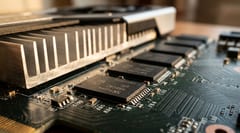
AI NewsMicrosoft unveiled MAI-Thinking-1 at Build 2026, its first reasoning model trained in-house without distillation. The 35B-active, ~1T-total MoE has a 256k context window, scores 97.0% on AIME 2025 and matches Claude Opus 4.6 on SWE-Bench Pro. It's in private preview on Microsoft Foundry.
Jun 23, 2026 · 5 min read 
Deep DivesA deep dive into the KV cache in LLM inference: why autoregressive decoding needs it, how it dominates GPU memory, the 60-80% waste of contiguous allocation, and how vLLM's PagedAttention fixed it.
Jun 22, 2026 · 9 min read 
AI NewsMistral AI used its May 2026 AI Now Summit to pivot toward industrial engineering, announcing a physics-AI stack, the Emmi acquisition, partnerships with Airbus, BMW (crash simulation) and ASML, the unified Vibe agent, and a 10 MW Les Ulis inference data center opening Q3 2026.
Jun 19, 2026 · 5 min read 
Deep DivesModel collapse is the progressive degradation of generative models trained recursively on synthetic data, documented in Nature (Shumailov et al., 2024). Errors compound and rare data vanishes, but research (Gerstgrasser et al., 2024) shows accumulating real data alongside synthetic data, tracking ratios, and verifying generations prevents it.
Jun 19, 2026 · 8 min read 
Deep DivesTest-time compute spends extra computation during inference, not training, to improve answers. It powers reasoning models like OpenAI o1 and DeepSeek-R1. Two strategies exist: sequential scaling (longer chains of thought, e.g. the s1 paper's budget forcing) and parallel scaling (Best-of-N, majority voting). More thinking is not always better, overthinking degrades accuracy, and hidden reasoning tokens are billable. Match compute to task difficulty.
Jun 17, 2026 · 8 min read 
AI NewsMiniMax M3 is an open-weight model pairing a 1M-token context and revived sparse attention with frontier coding benchmarks at 15x lower cost than Claude Opus 4.7.
Jun 16, 2026 · 6 min read 
Deep DivesSpeculative decoding speeds up LLM inference 2-6x by having a small draft model propose tokens that the target model verifies in parallel via rejection sampling, guaranteeing lossless output. EAGLE-3 and Medusa reduce or remove the separate draft model. Gains are largest at low batch sizes.
Jun 15, 2026 · 7 min read 
Deep DivesDiffusion language models (dLLMs) abandon left-to-right autoregressive generation, instead refining masked noise into text over a few parallel denoising steps. Inception Labs' Mercury Coder runs at 1,100+ tokens per second on H100s versus 50-200 for autoregressive models, and LLaDA 8B's bidirectional design breaks the reversal curse. They still trail the best models on hard reasoning benchmarks, but the one-token-at-a-time assumption is no longer a law of nature.
Jun 12, 2026 · 8 min read 
AI NewsOn May 22, 2026, DeepSeek made its 75% promotional discount on V4-Pro permanent rather than letting it expire May 31. New permanent rates: $0.435/M input, $0.87/M output, $0.003625/M cache hit. That puts V4-Pro output roughly 34x cheaper than GPT-5.5 and 17x cheaper than Claude Opus 4.7, while landing within 3-7 points on coding and reasoning benchmarks. The underrated detail is the cache-hit price, which can cut input cost ~88% for agents with stable prefixes. Teams should re-run their build math and route the easy majority of traffic to V4-Pro.
Jun 1, 2026 · 5 min read 
AI NewsAnthropic released Claude Opus 4.8 on May 28, 2026, 41 days after Opus 4.7. It scores 69.2% on SWE-Bench Pro, emphasizes calibrated honesty and longer autonomy, adds Dynamic Workflows for hundreds of parallel subagents, runs fast mode ~2.5x quicker, and holds pricing flat from 4.7.
May 30, 2026 · 4 min read 
AI NewsGemini 3.5 Flash outperforms the Pro tier on agent benchmarks with superior speed and efficiency.
May 28, 2026 · 5 min read 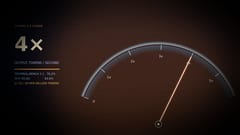
Open SourceNVIDIA Ising offers open-source AI models to improve quantum error correction, making quantum computing more effective.
Apr 17, 2026 · 6 min read 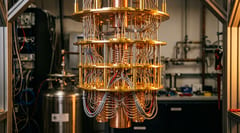
AI NewsMeta Muse Spark, from Superintelligence Labs, marks a strategic AI reset with top benchmarks and medical reasoning.
Apr 9, 2026 · 5 min read 
AI NewsOpenAI's GPT-5.4, with five variants and expert-level computer use, is reshaping the AI market.
Mar 29, 2026 · 5 min read