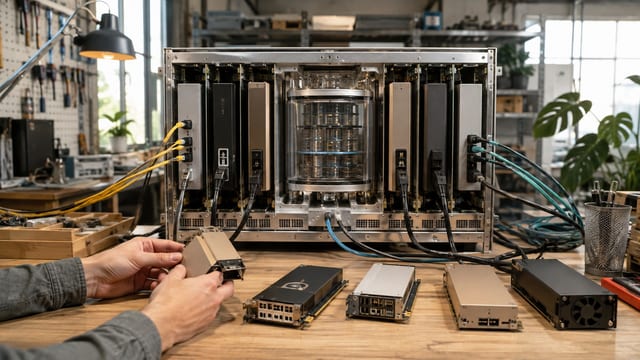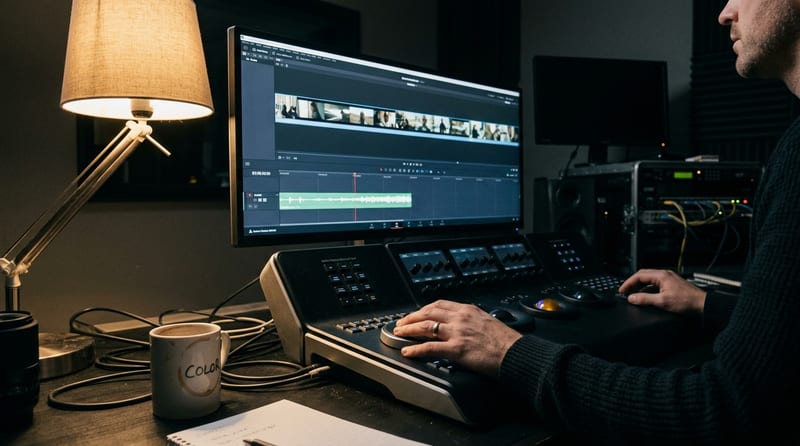
Every AI video model released in the last two years has shared the same humiliating limitation: it makes beautiful five-second clips and then stops. Directors call them "shots," not scenes, because that is all they are. Editing an actual sequence means generating a dozen fragments, praying the lighting matches, and stitching them in a timeline while a separate model tries to bolt audio on top.
Seedance 2.5 is ByteDance's attempt to end that workflow. Released on July 31, 2026, the newest version of the Seed video model generates a 30-second clip in a single run — with the audio produced in the same pass, not layered on afterward. It also supports multi-turn extension, so a 30-second scene can be pushed further without restarting from a text prompt.
For context on how large a jump that is: Google's Gemini Omni Flash, which reached the Gemini API on June 30, 2026, ships with a stated limitation of "10-second video generations currently, with longer durations coming soon." Seedance 2.5 triples that today.
One pass, video and audio together
The single-pass audio is the part that changes production math rather than just benchmark bragging rights.
Most pipelines today treat sound as post. You generate silent video, then generate or license music, then attempt lip-sync with a third tool, then discover the mouth movements drift by four frames and start over. Seedance 2.5 collapses those steps because the model is producing both modalities from the same conditioning.
ByteDance goes further with a genuinely useful inversion: a single voice, music, or sound-effect track can drive the video. Feed it a music bed and the model will match cuts to the beat. Feed it a voice recording and it will drive lip-sync from that audio. The soundtrack becomes the timing spec instead of the thing you fight against at the end.
If you have ever tried to beat-match an AI-generated ad spot by hand, you already understand why this is the headline feature and the 30 seconds is the marketing number.
The reference budget is absurd — and that's the point
Here is the specification that made working editors sit up. A single Seedance 2.5 input can carry up to 30 images, 10 video clips, and 10 audio files as reference material.
That is not a convenience limit. That is enough to define a small production bible in one request:
| Reference type | Limit per input | What it buys you |
|---|---|---|
| Images | 30 | Character sheets, wardrobe, set dressing, style plates |
| Video clips | 10 | Camera moves, motion style, existing footage to match |
| Audio files | 10 | Voice, music bed, ambience, effects |
Multi-character scenes with consistent faces across multiple camera angles have been the hardest failure mode in generative video. Thirty reference images is a plausible answer to it — you are no longer hoping a text prompt reproduces the same actor twice. ByteDance also claims improvements to textures, lighting, and skin detail, which is the standard release-note language every video model ships with and the one thing you should verify with your own prompts.
The comparison to Google's current API is where this gets pointed. Google's own launch documentation lists these limitations for Gemini Omni Flash:
| Capability | Seedance 2.5 | Gemini Omni Flash (per Google's docs) |
|---|---|---|
| Max single generation | 30 seconds | 10 seconds, "longer durations coming soon" |
| Audio reference upload | Up to 10 files | Not yet supported in the Gemini API |
| Scene extension | Multi-turn extension | Not yet supported |
| Multi-video referencing | Up to 10 clips | Not supported; may degrade output |
| Conversational editing | Not the headline feature | Yes — up to three stacked sequential edits |
Google's limitation list is unusually candid, and it maps almost exactly onto Seedance 2.5's feature list. That is not a coincidence; it is a competitor reading a roadmap.
Where you can actually use it
This is where enthusiasm needs a cold compress.
At launch, Seedance 2.5 rolled out to Jimeng AI and the Pro tier of Doubao — ByteDance's own consumer surfaces. API access was announced as coming on Volcano Engine's Ark platform, the international version of which is BytePlus ModelArk.
The picture has moved since. BytePlus now publishes a "Dreamina Seedance 2.5 tutorial" in its ModelArk documentation, last updated August 7, 2026, alongside a companion guide for creating portrait videos with Dreamina Seedance models. Documentation existing is a strong signal that endpoints are live or imminent.
It is not proof that your account can call it. Regional availability on ModelArk varies by model, and a published tutorial has repeatedly preceded general availability by weeks in this product line. Before you build a production dependency on Seedance 2.5, confirm the model is selectable in your intended region and that a real generation request completes. Treat any third-party rate card you find as unverified until it appears in BytePlus's own pricing page.
The receipts on the previous version
Skepticism about vendor demos is healthy, so it is worth noting what the last Seedance did in the wild.
Seedance 2.0 leads the Artificial Analysis image-to-video leaderboard among models that generate audio. More concretely, District 9 director Neill Blomkamp used Seedance 2.0 to make "Nightborne," a 13-minute sci-fi horror short generated entirely with AI video, released in late July 2026. Every shot was model-generated from prompts; the faces and voices of 32 real people were used under licensing agreements, and human artists produced the concept art. Blomkamp has since founded Barley Studios to pursue a full-length feature in the same format.
A working feature director shipping 13 minutes of screen time is a materially different signal than a curated highlight reel — though it is worth noting the reception was mixed, with some critics finding the result more interesting as a technical proof than as a film.
ByteDance is running the same play for 2.5, showcasing a short film called "The Missing Pair" produced entirely with the new model. Judge it as marketing — but judge it as marketing with a credible predecessor.
Who this actually threatens
Not Hollywood. Ad teams.
A 30-second single-pass clip with native audio is, almost exactly, the length of a broadcast spot or a pre-roll unit. Agencies currently assemble those from a dozen four-second generations plus a separate audio workflow, and the assembly labor is where the cost lives. Collapsing that into one pipeline does not make the output better than a real shoot; it makes the output cheap enough that the comparison stops mattering for a large tier of commercial work.
The competitive read is equally blunt. Google's Omni Flash counters with conversational editing — refine a clip in plain English, one instruction at a time, without re-prompting from scratch — at $0.10 per second of video output, the same rate as Veo 3.1 Fast. Google also watermarks every generation with SynthID, which matters more than it sounds like for any brand that needs provenance on delivered assets.
ByteDance is betting that duration and reference control matter more than dialogue-style revision. Google is betting the opposite. Both bets can be right for different buyers — and the honest answer today is that Google publishes a rate card and a working API in documented regions, while ByteDance publishes a better spec sheet.
The Bottom Line
Seedance 2.5 is the first video model whose output length matches a real deliverable rather than a demo GIF. Thirty seconds with synchronized native audio, driven by up to 30 reference images, is a production tool rather than a toy — if you can get API access in your region, which as of this writing remains the open question rather than a solved one. Verify availability before you promise a client a pipeline. But the direction is unmistakable: the era of stitching four-second fragments is ending, and it is ending faster than the tools built to stitch them can adapt.