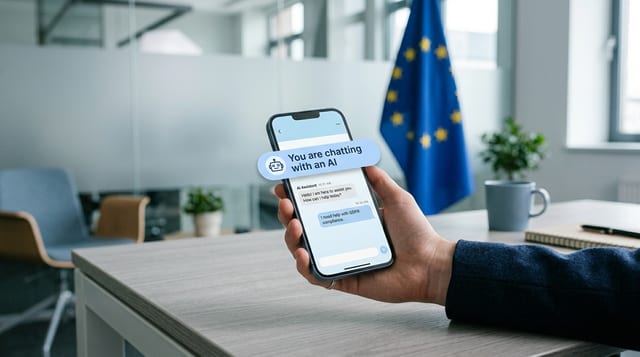
Most people assume a human rejected them for a job. Increasingly, no human ever saw the application. Automated hiring tools now score, sort, and rank candidates before a recruiter looks at anyone — and a class action winding through a California federal court is testing whether that automation can quietly break civil-rights law.
The case is Mobley v. Workday, and it has become the closest thing the industry has to a referendum on algorithmic hiring.
One man, one hundred rejections
Derek Mobley, a Black man over 40 with a degree from Morehouse College, applied to more than 100 jobs routed through Workday's recruiting platform. He was rejected from every one. In February 2023 he sued — not the employers, but Workday itself, arguing the vendor's screening algorithms discriminated against applicants based on race, age, and disability.
The novel legal move was going after the software maker rather than the companies using it. In a July 2024 ruling, the court let that theory survive, finding it plausible that Workday acts as an "agent" of its customers because employers had effectively delegated the decision to advance or reject candidates to Workday's tools. If a vendor performs a traditional employer function, the court reasoned, it can be held to the same anti-discrimination duties.
From one plaintiff to a nationwide collective
The case escalated sharply in 2025. On May 16, 2025, a federal judge granted conditional certification for a nationwide collective action under the Age Discrimination in Employment Act (ADEA). The collective covers all applicants aged 40 and older who applied for jobs through Workday on or after September 24, 2020 and were denied "employment recommendations." A court-authorized opt-in period opened in January 2026.
The scale is what makes employers nervous. In its own filings, Workday indicated its system processed roughly 1.1 billion rejected applications during the covered window. A conditional certification is not a finding of wrongdoing — Workday denies its tools discriminate, and the plaintiffs still have to prove their case — but the ruling means one lawsuit can now stand in for a decision that touched an enormous slice of the U.S. labor market.
Why "no intent" is not a defense
The legal engine here is disparate impact. Unlike disparate treatment, which requires proving someone meant to discriminate, disparate impact asks a simpler question: did a neutral-looking practice fall more harshly on a protected group?
An algorithm doesn't need a motive to be illegal. It only needs an outcome that disproportionately screens out people over 40, women, or racial minorities — and no adequate business justification for it.
That's precisely the risk with models trained on historical hiring data. If past human decisions favored certain candidates, a system that learns to imitate "successful hires" can encode those preferences and then apply them at machine scale. The bias becomes faster, cheaper, and far harder to see.
This has happened before
Mobley isn't the first warning. In 2023 the EEOC settled with iTutorGroup for $365,000 after the company's application software was programmed to automatically reject female applicants aged 55 and older and male applicants aged 60 and older. That case was blunt — an explicit age cutoff in code — and it settled quickly. The Workday litigation is harder and more consequential precisely because the alleged discrimination is emergent rather than hand-coded, buried in a model's learned weights instead of a visible if statement.
Regulators are moving, unevenly
The clearest rulebook so far is New York City's Local Law 144, in force since July 5, 2023. Any employer using an Automated Employment Decision Tool (AEDT) for a New York City role must:
- Commission an annual, independent bias audit covering race/ethnicity and sex;
- Publish a summary of the audit results publicly on its website; and
- Notify candidates at least 10 business days before the tool is used.
It's a transparency-first approach — it doesn't ban biased tools, it forces the numbers into daylight. Workday itself responded to the pressure, publishing an external bias audit in late 2024 covering ten of its largest enterprise customers using Local Law 144's methodology.
The rest of the country is a patchwork. Federal EEOC guidance exists but enforcement priorities shift with administrations, and state efforts have advanced and retreated. The result: a company running the same hiring tool can face rigorous audit duties in one city and none a few miles away.
What this means if you're building or buying
For employers, the comfortable fiction that "the vendor's algorithm did it" is eroding. If a court can treat the software maker as an agent, it can just as easily treat the employer as responsible for the tool it chose to deploy. Practical hygiene now looks like: demand a completed independent bias audit before purchase, document the business justification for any screening criterion, keep a human meaningfully in the loop on rejections, and retain the data needed to defend an outcome later.
For vendors, "we just provide the software" is no longer a reliable shield. The market is already shifting — buyers increasingly refuse to sign until a bias audit is in hand.
The Bottom Line
Algorithmic hiring promised to remove human bias from recruiting. Mobley v. Workday is testing an uncomfortable alternative: that it can industrialize bias instead, applying old prejudices at a scale of a billion decisions while giving everyone involved plausible deniability. The law is catching up — through disparate-impact theory, agent liability, and audit mandates like NYC's Local Law 144 — but slowly and unevenly. Until it does, the safest assumption for anyone deploying these tools is the one the courts are converging on: if your algorithm makes the decision, you own the outcome.