For more than a decade, Siri was the assistant Apple wished it could fix. At WWDC 2026 on June 8, it finally tried — and the most important number on stage was one Apple barely mentioned: roughly $1 billion a year, paid to Google.
That is the reported price of the deal powering the rebuilt Siri. Apple's new assistant runs on a custom, Apple-tuned version of Google's Gemini, hosted inside Apple's own infrastructure. After years of insisting it could go it alone in AI, Apple has quietly admitted it needed help — and went to its biggest search rival to get it.
What Apple actually announced
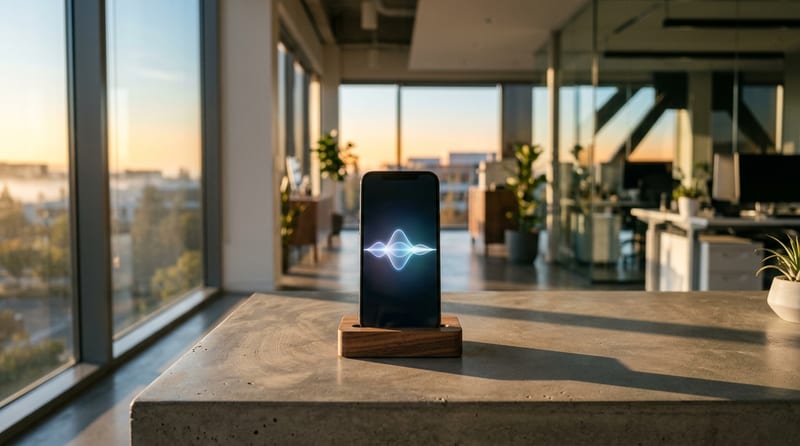
Apple opened the keynote at Apple Park with a completely rebuilt Siri, pitched as a direct competitor to ChatGPT, Claude, and Gemini itself. The new assistant is more conversational, aware of what's on your screen, and gets its own standalone app in addition to working across the system.
The architecture is a split-brain design:
- On-device: Apple's next-generation foundation models on Apple Silicon handle expressive voices, dictation, on-screen awareness, and quick personal-context lookups.
- In the cloud: Heavier world-knowledge and complex reasoning requests route to the Gemini-powered model through Private Cloud Compute, Apple's privacy-hardened server tier.
Apple SVP Craig Federighi was emphatic about the privacy framing. "We believe privacy in AI is non-negotiable," he said, adding that "data is only used to execute your request, and outside experts can continue to verify this promise at any time."
The model under the hood
The Gemini variant Apple licensed is not the consumer Gemini you get in the Google app. According to reporting on the deal, it is a custom 1.2-trillion-parameter model built specifically for Siri and Apple Intelligence — roughly eight times larger than Apple's own ~150-billion-parameter cloud models. It uses a mixture-of-experts (MoE) architecture tuned for summarization, planning, and natural-language understanding.
Crucially, Apple says the model runs inside its own Private Cloud Compute, not on Google's servers, and the contract bars Google from training future Gemini versions on Apple user data. Queries are processed statelessly, with nothing retained.
The arrangement is unusual: Apple is licensing a rival's frontier model as a component, then wrapping it in Apple's own privacy guarantees and hardware. Google gets paid and gets reach; Apple gets a competitive assistant without having trained a frontier model itself.
Why Apple blinked
The subtext of the whole keynote was catch-up. As TechCrunch's coverage put it, Apple has spent two years racing to close an AI gap while smaller software frustrations piled up — a divisive design overhaul, a search function that barely worked, unreliable file sharing. The keynote led with fixes before features, framing a better Siri as one line item on a long list rather than the headline triumph.
There's also a leadership backdrop. WWDC 2026 was Tim Cook's last as CEO; he hands the company to hardware chief John Ternus on September 1. Closing the Siri gap before the handoff matters for the story Apple wants to tell about its next chapter.
The Siri overhaul didn't arrive alone. Apple paired it with Apple Intelligence updates across its apps — Safari tab management, one-tap password updates, cross-app context, AI reply suggestions in Messages, and a Phone app that can pull context from Mail and Messages mid-call. Apple said it collaborated with Google and the Gemini family to build the next generation of Apple Foundation Models behind those features, too.
What it means for the AI map
This deal reshapes a few things at once. It deepens Apple's dependence on Google well beyond the existing search-default arrangement, handing Google a second enormous distribution channel into iPhone users. It validates the "license a frontier model as infrastructure" pattern — Apple is effectively treating Gemini the way it treats a chip supplier. And it raises an obvious antitrust eyebrow: the two companies are already entangled in search, and now they're entangled in AI.
For users, the practical question is simpler: does the new Siri actually work? Apple's privacy architecture is genuinely differentiated, and routing only hard queries to the cloud is a sensible design. But Apple has promised a transformed Siri before. This time it's spending a billion dollars a year, and borrowing a competitor's brain, to make sure it lands.
The Bottom Line
Apple's new Siri is the clearest admission yet that building a frontier model in-house was a race Apple chose not to win alone. By licensing a custom 1.2-trillion-parameter Gemini model and wrapping it in Private Cloud Compute, Apple gets a competitive assistant and keeps its privacy story intact — while writing Google a billion-dollar check every year. Whether that's a savvy supply-chain move or a strategic dependency Apple will regret depends entirely on how good the rebuilt Siri turns out to be in everyday use.